

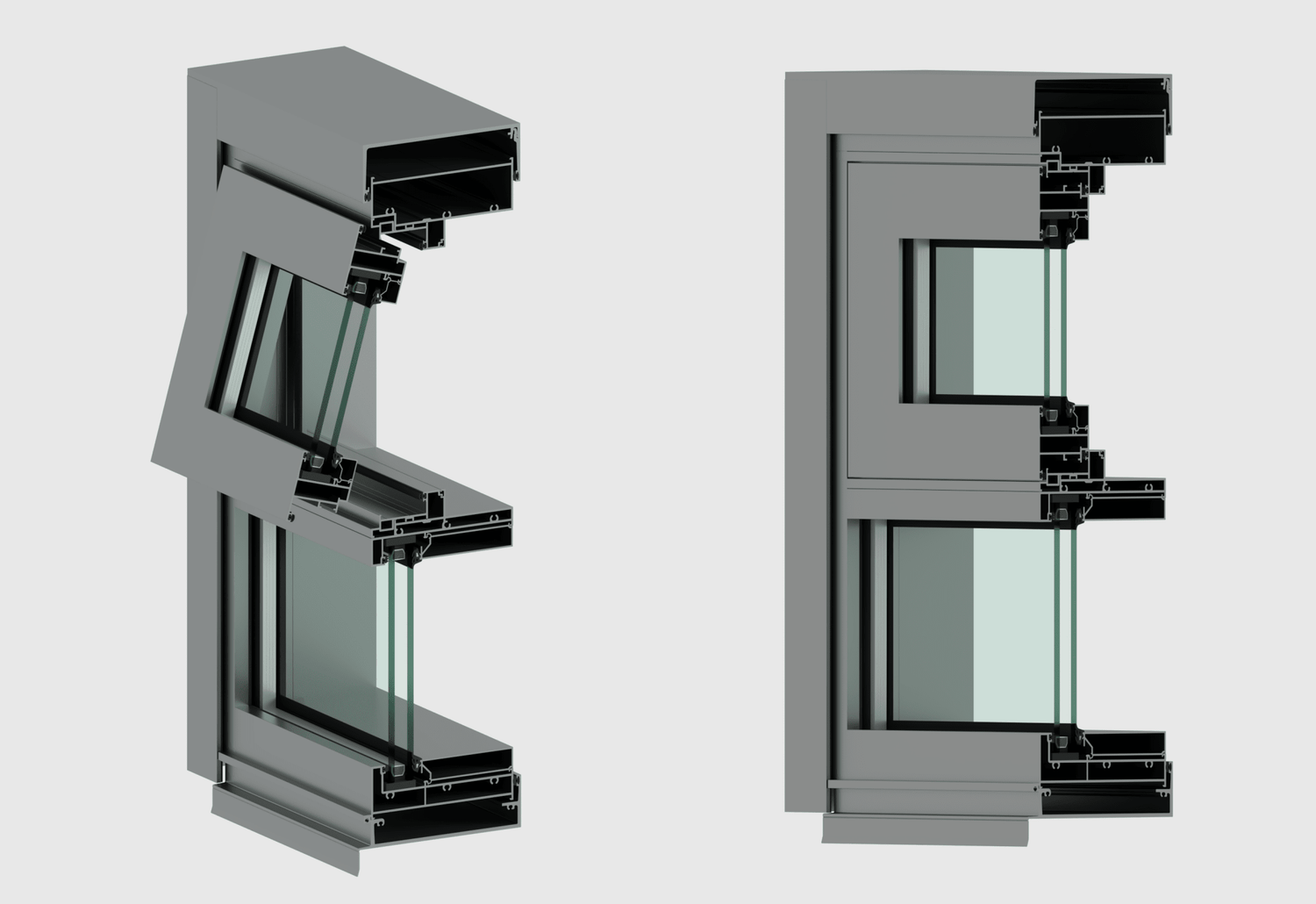
In Australia, window selection is not purely an architectural decision—it is a compliance and risk-management decision. External windows form a critical part of the building envelope and must satisfy mandatory requirements for structural strength, water penetration resistance, air infiltration, bushfire exposure, and energy efficiency.
Among common window types, awning windows (top-hinged, outward-opening) are widely recognised as one of the most test-compatible and performance-reliable solutions for Australian residential and multi-residential projects.
Why Compliance Matters in the Australian Market

All external windows used in Australian buildings must comply with AS 2047 – Windows and External Glazed Doors in Buildings, the core performance standard referenced by the National Construction Code (NCC).
AS 2047 defines minimum performance requirements for wind pressure resistance, water penetration, air infiltration, and operational durability. Compliance is mandatory for building approval and performance claims must be supported by testing in accordance with the AS 4420 test series.
Official references:
Structural Logic: Why Awning Windows Perform Consistently

Awning windows are top-hinged and open outward with a controlled opening angle. When closed, they operate using compression seals. Under wind pressure, the sash is forced tighter against the frame rather than being pulled away from it.
This structural load path naturally improves water and air sealing performance, particularly under wind-driven rain conditions. In contrast, sliding windows rely primarily on brush seals, making their performance more sensitive to installation quality, wear, and long-term maintenance.
AS 2047 Performance Comparison
In laboratory testing environments, awning windows typically deliver stable and repeatable results across key AS 2047 performance criteria due to their sealing logic and structural simplicity.
| Performance Aspect | Awning Window | Sliding Window | Casement Window | Fixed Window |
|---|---|---|---|---|
| Wind Load Resistance | High | Moderate | High | Very High |
| Water Penetration Resistance | High | Low–Moderate | High | Very High |
| Air Infiltration Control | Good | Moderate | Good | Excellent |
| Testing Consistency | High | Variable | High | Highest |
| Suitability for Coastal & Rainy Regions | Excellent | Limited | Good | Excellent |
Performance in High-Rainfall and Coastal Regions
In regions such as Queensland and New South Wales, rainfall intensity and wind-driven rain are key design considerations. Awning windows perform particularly well in these environments due to their outward-opening sash and top-hinged configuration, which helps deflect rainwater away from the opening.

When combined with multi-seal systems, this design reduces water ingress risk during AS 4420.5 water penetration testing and improves real-world weather performance.
Bushfire-Prone Areas and BAL Compliance

For projects located in bushfire-prone areas, windows must also comply with AS 3959 – Construction of Buildings in Bushfire-Prone Areas. Awning windows are commonly specified for BAL-29 and BAL-40 applications due to:
- Controlled and limited opening geometry
- Compatibility with stainless steel fire-rated flyscreens
- Easy integration with fixed glazing modules tested as a system
Reference: AS 3959 – Bushfire Construction Standard
Energy Performance Under NCC and NatHERS

Under the NCC and the NatHERS energy assessment framework, window airtightness and glazing configuration have a direct impact on whole-building thermal performance.
Awning windows support energy compliance by achieving lower air infiltration rates, maintaining stable seals over time, and integrating effectively with double glazing, Low-E glass, and thermally broken frames.
Industry Guidance and Accreditation
The Australian Glass and Window Association (AGWA) provides industry guidance, compliance frameworks, and accreditation pathways aligned with AS 2047 and the NCC. AGWA-accredited products offer additional confidence in declared performance outcomes.
Conclusion: A Window Type Designed Around Testing Certainty

In Australian residential and multi-residential projects, awning windows are not selected simply for cost or convention. They are chosen because their structural logic aligns naturally with local performance standards, climate conditions, and regulatory requirements.
With consistent AS 2047 test results, strong water resistance in high-rainfall regions, compatibility with bushfire compliance, and reliable energy performance, awning windows represent a rational, low-risk window solution for Australian developments.


Leave a comment
This site is protected by hCaptcha and the hCaptcha Privacy Policy and Terms of Service apply.