

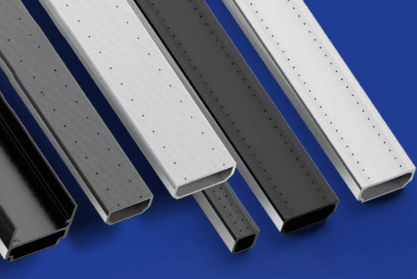
In Australian projects, glazing performance is not just about selecting “double glazing” — it is about system-level performance, compliance certainty, and long-term operational cost.
Under the National Construction Code (NCC 2022), window performance is assessed as a total system (Uw), meaning the spacer is not a minor component — it directly affects compliance outcomes.
NCC Official Reference – U-Value Calculation
1. The Hidden Risk in Most Australian Projects

In many Australian residential and commercial developments, glazing specifications focus heavily on glass type — Low-E coatings, double glazing, and gas filling — but overlook the spacer.
This creates a critical performance gap.
- Aluminium spacers act as thermal bridges
- Heat transfer concentrates at the glass edge
- Total system Uw increases beyond expected values
What this means in practice:
- A window specified to meet NCC targets may fail once system performance is calculated
- Energy modelling results become inaccurate
- Developers face unexpected compliance issues during certification
This is why the industry explicitly warns against relying on glass-only values:
Industry Warning – Misuse of Glass-Only Performance Data
Key takeaway: Most performance gaps in Australian glazing systems originate at the edge — not the glass centre.
2. Why Warm Edge Spacers Change the Outcome

Warm edge spacers are engineered from low-conductivity materials, designed to eliminate the thermal bridge created by traditional aluminium spacers.
Instead of transferring heat rapidly, they:
- Slow down heat flow at the perimeter of the IGU
- Stabilize internal glass surface temperatures
- Improve overall system insulation performance
From a building physics perspective, this directly reduces linear thermal transmittance (Ψ-value), which is a critical factor in high-performance glazing systems.
Australian Government – Passive Design Glazing Guide
Why this matters for developers:
- More predictable performance outcomes
- Reduced gap between “specified” and “as-built” results
- Higher confidence during energy modelling and approvals
This is not a premium upgrade — it is a performance correction.
3. Real Impact on NCC 7-Star Compliance

Warm edge spacers deliver measurable improvements in system-level performance, typically reducing Uw by:
- 0.1–0.2 W/m²·K
While this appears small, under NCC 2022 it is often the difference between:
- Passing or failing energy compliance
- Achieving or missing NatHERS 7-Star ratings
NCC 2022 Performance Requirements Overview
Real project implication:
- Designs operating close to compliance thresholds have minimal tolerance
- Ignoring spacer performance reduces compliance margin
- Late-stage upgrades become costly and disruptive
Additionally, improved glazing performance directly reduces heating and cooling loads:
NCC 2022 Glazing Energy Analysis
Bottom line: Warm edge spacers improve not just compliance — but total building energy performance.
4. Built for Australian Climate Reality

Australia’s diverse climate zones mean glazing systems must perform under very different environmental conditions.
Spacer selection directly influences how windows behave in real-world scenarios.
-
Queensland (Hot & Humid):
Warm edge spacers help maintain higher internal glass temperatures, reducing condensation risk and improving indoor comfort. -
Victoria / Tasmania (Cold):
They significantly reduce perimeter heat loss, improving thermal retention and reducing heating demand. -
New South Wales (Mixed Climate):
Spacer performance contributes to balancing insulation (Uw) and solar gain (SHGC), which is critical for compliance.
Queensland Residential Energy Efficiency Standards
Key insight:
Two windows with identical glass specifications can perform very differently depending on the spacer.
The spacer determines whether performance is theoretical — or real.
5. A Low-Cost Decision with High Project Impact

Under NCC requirements, developers must use total system values when assessing glazing performance:
This makes spacer selection a critical compliance decision, not just a technical detail.
Risks when using aluminium spacers:
- Overestimated thermal performance
- Reduced compliance margin
- Potential redesign or re-specification
- Higher long-term operational energy costs
Benefits of warm edge spacers:
- ✔ Improved and more reliable Uw performance
- ✔ Better alignment with NCC requirements
- ✔ Reduced condensation-related defects
- ✔ Lower lifecycle cost through improved efficiency
From a developer perspective:
This is one of the lowest-cost, highest-impact upgrades available in the glazing system.
Final Insight: System Performance, Not Component Specification
Under the Australian Fenestration Rating Council (AFRC), window systems are rated as a complete assembly — not individual components.
Spacer selection directly influences certified Uw values and overall system performance.
If it is not specified correctly, the system is not performing as designed.
Why Proline Aluminum
At Proline Aluminum, we design glazing systems specifically for Australian compliance and real-world performance:
- Warm edge spacer integration as standard
- Low-E double and triple glazing systems
- Argon gas-filled IGUs
- Thermally broken aluminium structures
We deliver system performance that aligns with NCC requirements — not just product specifications.


Leave a comment
This site is protected by hCaptcha and the hCaptcha Privacy Policy and Terms of Service apply.