

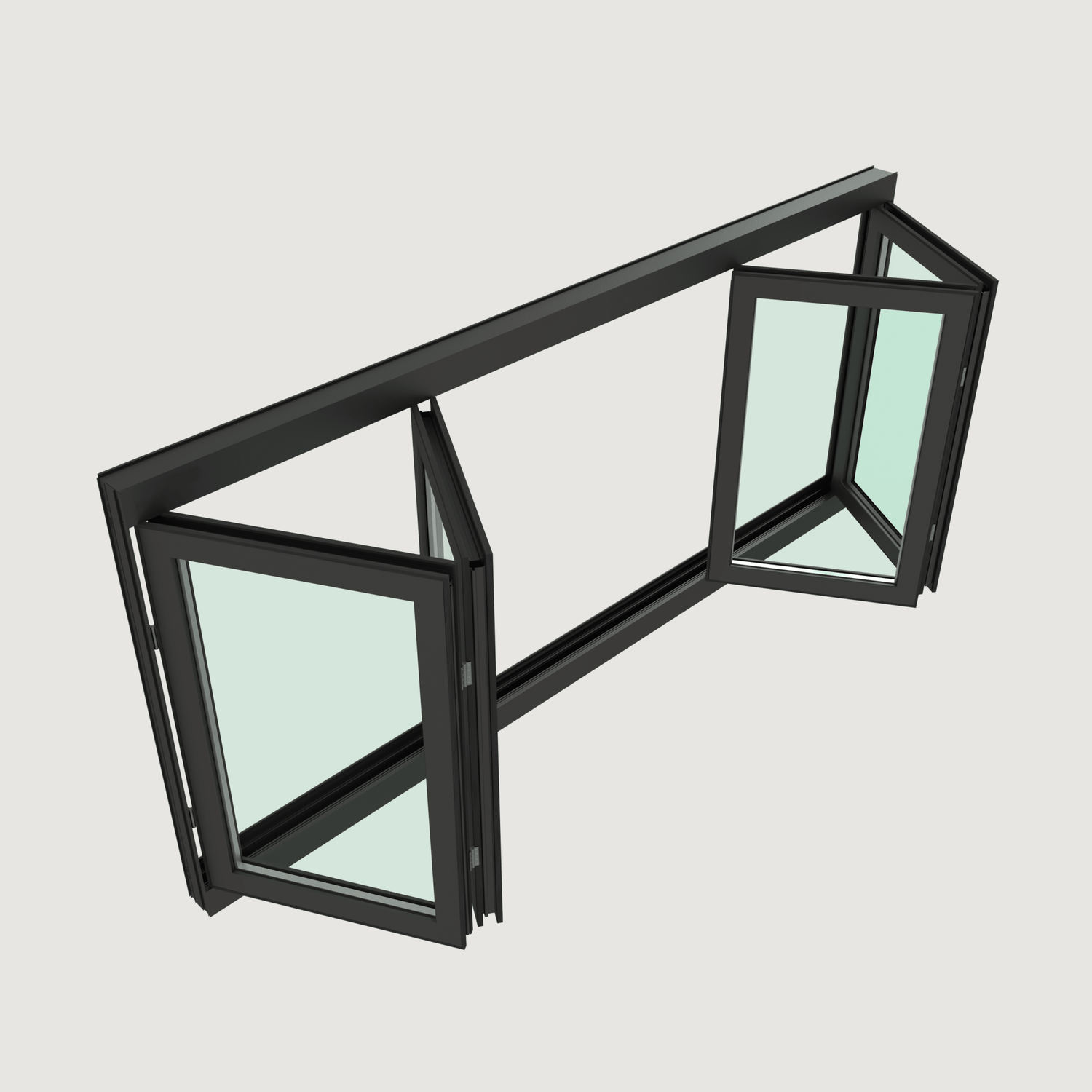
Redefining Indoor–Outdoor Architecture

In Australia’s architecture and residential design market, bi-fold windows have become a defining feature of modern indoor–outdoor living. From suburban homes to high-end coastal villas and vibrant urban cafés, folding window systems create expansive openings and seamless transitions between interior and exterior spaces.
With Australia’s climate and lifestyle centered around outdoor entertaining and natural ventilation, bi-fold windows are increasingly specified in both new builds and renovation projects.
What Are Bi-Fold Windows?

Bi-fold windows (also known as folding or concertina windows) consist of multiple panels connected by hinges that slide along a track system and fold to one or both sides. When fully opened, they can achieve up to 90% clear opening space, making them ideal for large wall openings.
A typical system includes:
- Aluminium or timber-aluminium framed panels
- Top-hung or bottom-rolling track systems
- Multi-point locking hardware
- High-performance weather seals
- Double or triple glazing options
Why Bi-Fold Windows Are Popular in Australia
1. Indoor–Outdoor Living Culture

Australian homes are commonly designed around open-plan layouts and outdoor entertaining areas. Bi-fold windows are often installed between kitchens and alfresco dining spaces, living rooms and patios, or entertainment areas and gardens. They allow homeowners to transform interior spaces into open entertaining zones within seconds.
2. Café & Hospitality Applications

In cities such as Sydney, Melbourne, and Brisbane, bi-fold windows are widely used in cafés, bars, and restaurants. They create service openings that improve workflow, enhance customer interaction, increase ventilation, and provide flexible weather control.
Performance & Energy Efficiency

Modern Australian bi-fold window systems are engineered to meet strict performance requirements. High-quality systems typically feature:
- Thermal break aluminium frames to reduce heat transfer
- Double or triple glazing with Low-E coatings
- Multi-layer weather sealing systems
- Integrated drainage design
- Reinforced structures for wind resistance
When closed, properly designed systems deliver strong thermal insulation, acoustic control, and weather protection.
Australian Standards & Compliance

Compliance is critical in the Australian construction industry. Bi-fold window systems must meet national regulations before installation in residential or commercial projects.
AS 2047 – Windows and External Glazed Doors
This standard specifies structural performance, air infiltration, water penetration resistance, and ultimate strength testing. Compliance with AS 2047 is mandatory under the National Construction Code (NCC).
AS 1288 & AS/NZS 2208 – Glass Standards
These standards regulate glass selection, installation, and safety requirements, including toughened and laminated safety glass.
WERS – Window Energy Rating Scheme
WERS provides independent energy performance ratings for windows, helping builders and developers meet residential energy efficiency targets.
Key Design Considerations
- Wind load classification based on geographic region
- Panel weight and track load capacity
- Coastal corrosion resistance finishes
- Proper flashing and waterproofing integration
- Hardware durability (20,000+ operation cycles recommended)
Large-span openings require structural planning to ensure smooth long-term operation and compliance.
Bi-Fold vs Other Window Types
| Feature | Bi-Fold Window | Sliding Window | Awning/Casement |
|---|---|---|---|
| Opening Area | Up to 90% | Approx. 50% | Limited by panel size |
| Indoor–Outdoor Integration | Excellent | Moderate | Moderate |
| Ventilation Control | Flexible | Partial | Good |
| Visual Impact | High | Standard | Traditional |
Conclusion
Bi-fold windows are more than just an opening mechanism — they are a strategic architectural solution. In Australia’s climate and lifestyle context, they enhance ventilation, maximize daylight, and create adaptable living environments.
For architects, developers, and homeowners, selecting a compliant, high-performance bi-fold window system ensures durability, safety, and energy efficiency — while delivering the open, connected living experience that defines modern Australian design.


Leave a comment
This site is protected by hCaptcha and the hCaptcha Privacy Policy and Terms of Service apply.