

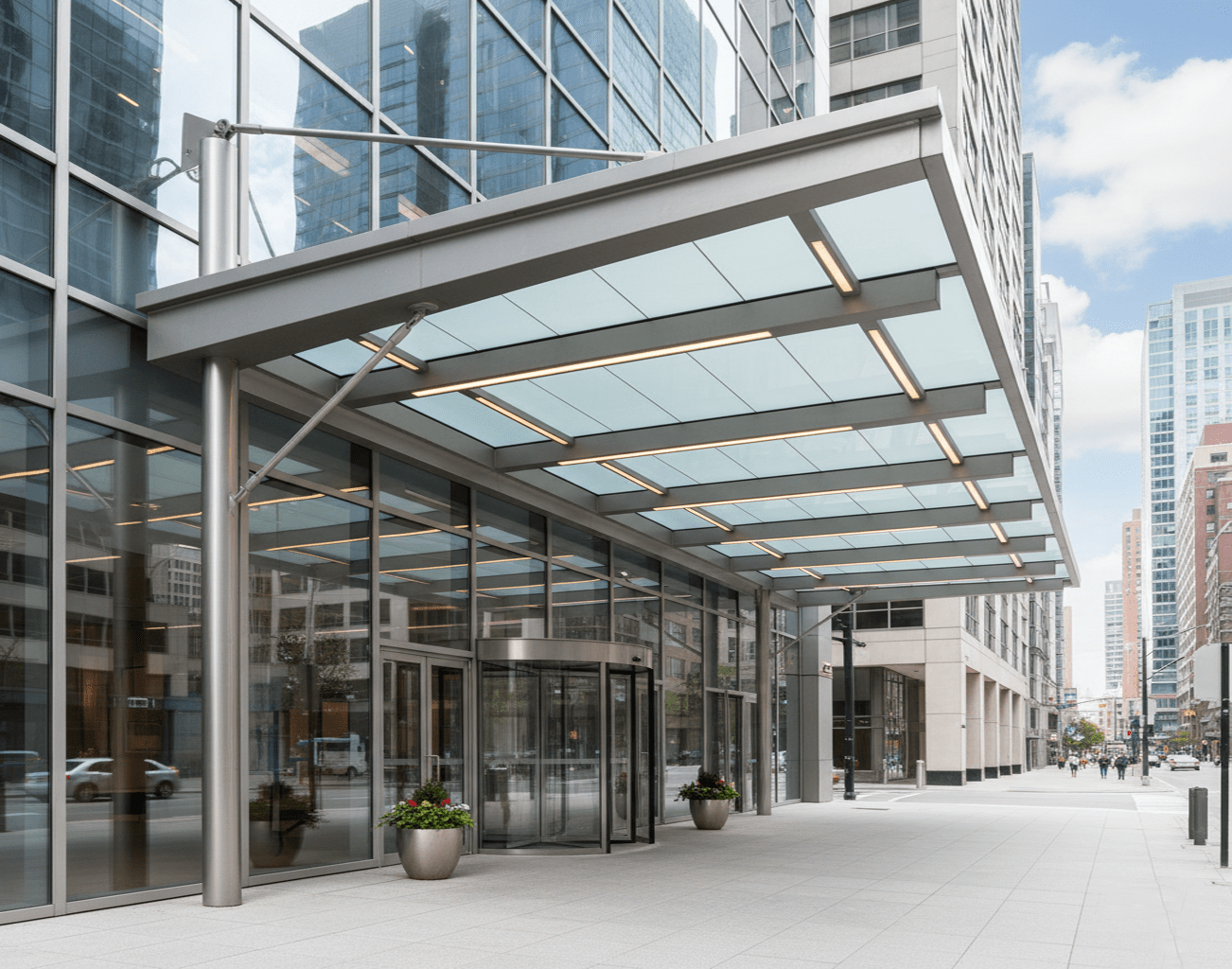
Cost, Energy Performance and Design Strategy
The facade system is one of the most critical elements in modern buildings. In Australia, especially in Queensland (QLD), facade design is not only an architectural decision but also a balance between climate performance, regulatory compliance, construction efficiency, and lifecycle cost.
For developers and contractors, the choice between curtain wall systems and aluminium facade systems significantly impacts project budget, building energy performance, and long-term maintenance costs.
This article provides a detailed analysis of these two facade approaches within the context of the Queensland construction market.
1. Building Environment and Regulatory Context in Queensland

Facade design in Queensland differs significantly from southern Australian cities due to the region’s subtropical climate conditions. Buildings must respond to several environmental factors:
- High solar radiation
- High humidity levels
- Intense rainfall events
- Salt-air corrosion in coastal areas
- Strong wind loads and cyclone zones
Brisbane receives approximately 1100 mm of rainfall annually, often occurring as short periods of heavy rain, emphasizing water management and facade drainage design.
Regulatory compliance is required under the National Construction Code (NCC). Key areas affecting facade design include:
- Section J – Energy Efficiency
- Weatherproofing requirements
- Fire safety provisions
Structural performance must comply with AS/NZS 1170 Structural Design Actions, particularly for wind loads.
In coastal Queensland locations such as the Gold Coast or Townsville, facade systems may need to resist wind pressures of 2.5 – 4.0 kPa, making curtain wall systems function as engineered structural facade assemblies.
2. Real Cost Structure of Curtain Wall Systems

Curtain wall systems are among the most expensive facade solutions in Australian commercial buildings. Installed costs in Queensland typically fall within the following ranges:
| Curtain Wall Type | Installed Cost (AUD/m²) |
|---|---|
| Standard double glazed curtain wall | 600 – 850 |
| High-performance curtain wall | 900 – 1200 |
| Custom architectural facade systems | 1300 – 1800 |
The real project cost is determined by the internal cost structure:
- Glass: 30–40% of total cost. Double glazing, Low-E coatings, laminated safety glass.
- Aluminium Framing: 20–25% of total cost. Mullions, transoms, and pressure plates designed for structural loads.
- Engineering & Design: 8–12% of total cost. Wind load analysis, structural calculations, thermal modelling.
- Installation: 35–50% of total cost. High labour costs, crane operations, skilled facade installers. Unitized curtain walls reduce onsite labour by 30%+.
3. Aluminium Facade Systems and Cost Logic
Aluminium facade systems function as opaque building envelope elements, often designed as rainscreen systems. Typical assemblies include:
- Aluminium cladding panels
- Structural subframe system
- Insulation layer
- Ventilated cavity
The outer panel provides weather protection, while the inner layers provide thermal and moisture performance.
Installed costs vary by material and design complexity:
| Aluminium Facade Type | Installed Cost (AUD/m²) |
|---|---|
| Aluminium composite panels (ACP) | 180 – 300 |
| Solid aluminium panels | 400 – 550 |
| Extruded aluminium facade systems | 350 – 500 |
| Custom architectural metal facade | 600 – 900 |
Cost drivers include panel material, subframe complexity, and exterior coating systems (PVDF or powder coating). Aluminium facade systems are typically 20–40% cheaper than curtain walls.
4. Energy Performance of Facade Systems

In Queensland’s climate, energy consumption is dominated by cooling demand. Facades act as the primary thermal barrier.
Curtain wall systems have higher solar heat gain, even with Low-E glass, resulting in larger HVAC sizing and increased operating costs.
| System | Thermal Performance |
|---|---|
| Single glazing curtain wall | Poor |
| Double glazing curtain wall | Moderate |
| Aluminium facade with insulation | Strong |
Many projects adopt a hybrid facade strategy (e.g., 40% curtain wall, 60% aluminium facade) to reduce Solar Heat Gain Coefficient (SHGC) and improve overall energy performance.
5. Construction Efficiency and Project Risk

Construction efficiency is a key concern for developers due to high labour costs and skilled labour shortages.
Stick curtain wall systems face:
- Long installation periods: 6–10 months for large buildings.
- Weather dependency: Rain and wind can delay installation.
- Quality variability: Sealant and alignment issues on site.
Unitized curtain walls reduce these risks through factory prefabrication and rapid onsite assembly. Aluminium facades are generally easier to install with lower precision requirements and reduced onsite labour.
6. How Developers Choose Facade Systems
Developers evaluate facades based on:
- Budget: Curtain walls provide visual impact but higher costs; aluminium facades are more cost-efficient.
- Energy Performance: Reducing glass ratios improves compliance with Section J and NABERS ratings.
- Architectural Identity: Premium buildings still use large glass areas for aesthetics and daylighting.
- Lifecycle Maintenance: Curtain walls require sealant replacement and inspections; aluminium facades have lower maintenance requirements.
Hybrid facade strategies combining curtain wall and aluminium facades optimize cost, energy efficiency, and architectural design, which is the current trend in Queensland commercial projects.

Leave a comment
This site is protected by hCaptcha and the hCaptcha Privacy Policy and Terms of Service apply.