
Overview
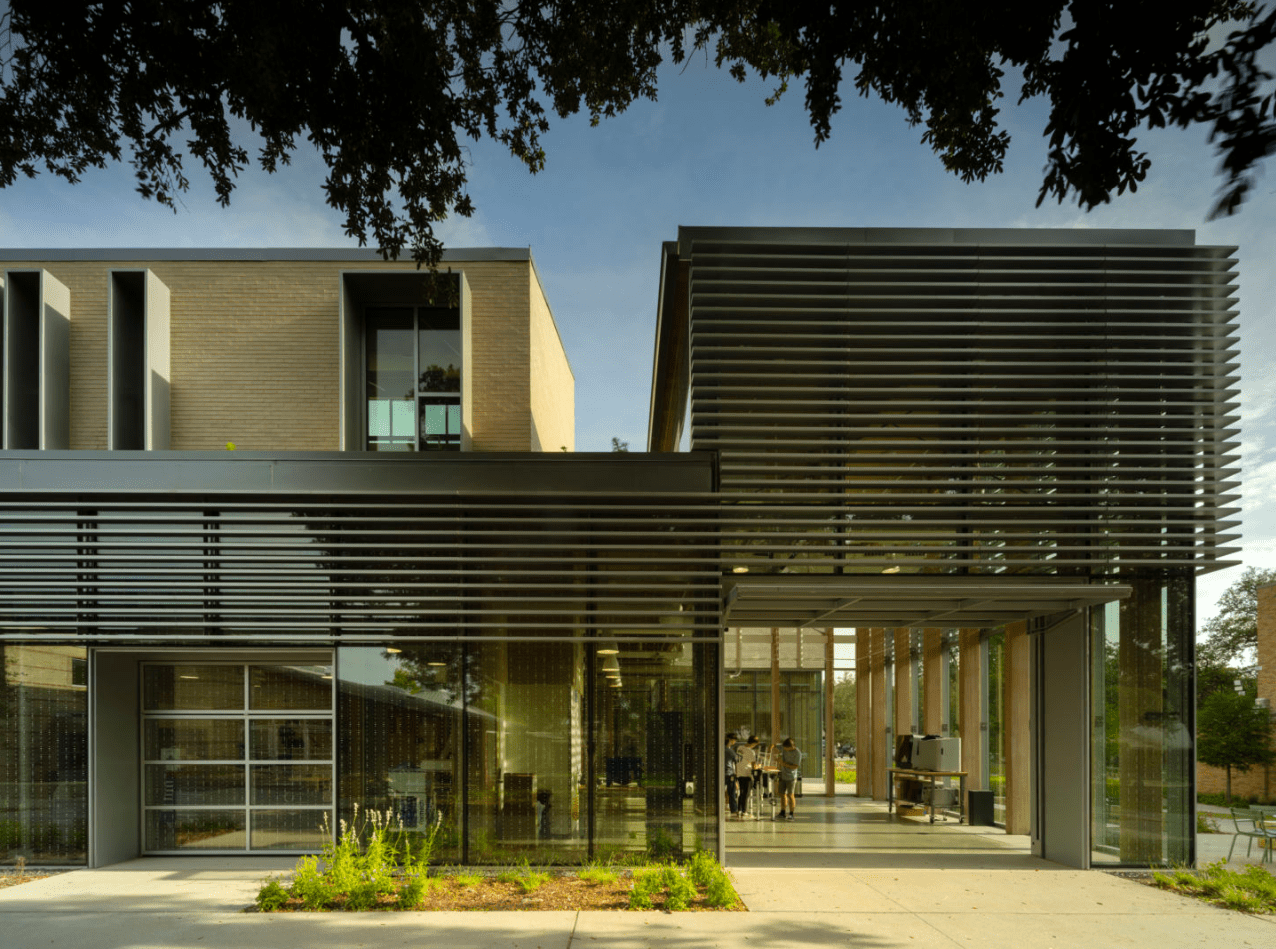
Louver fin façade systems are aluminium-based blade elements installed as shading, screening, or ventilation features. In Queensland’s climate, they reduce solar gain, improve occupant comfort and support passive design strategies while delivering a clean architectural expression.
Key Benefits

-
Solar shading and reduced cooling loads (fixed or adjustable fins).
Louver fins act as a high-performance solar control system by blocking direct summer sun while allowing diffuse daylight to enter the building. This reduces peak cooling loads, lowers HVAC energy consumption, and improves overall thermal comfort. -
Improved natural ventilation while providing visual privacy.
The open-fin geometry allows cross-breezes to flow through the façade, supporting passive cooling strategies required in subtropical design guidelines. At the same time, the angled louver blades obstruct direct sightlines from outside, ensuring privacy for occupants, balconies, and corridors without sacrificing airflow, light, or outdoor connection. -
Durability and corrosion resistance when specified in aluminium for coastal zones.
Aluminium louver fins—especially in marine-grade alloys such as 6063-T5/T6—are highly resistant to corrosion, making them ideal for Queensland's coastal regions exposed to salt spray and humidity. -
Design flexibility: vertical, horizontal, or patterned arrays for visual impact.
Louver fins can be configured in multiple arrangements—vertical blades for a sleek contemporary look, horizontal fins for classic shading performance, or custom geometric arrays to create a signature architectural identity. Designers can specify varying blade depths, spacing, curvature, and colours to achieve functional shading while enhancing façade articulation, depth, and rhythm.
Common Applications in Queensland
Typical uses include commercial façades, apartment screening, educational buildings, hotel facades, and industrial ventilation screens.
Compliance Requirements (What You Must Consider)

1. Fire Safety — National Construction Code (NCC)
Louver fins form part of a building’s external façade and must not materially contribute to fire spread. Design teams should specify non-combustible or tested low-combustibility materials and follow NCC guidance on external wall fire performance. For many projects, a fire engineer’s input may be required.
Read the ABCB / NCC advisory on external wall fire performance (ABCB)
2. Queensland Development Code (QDC) — External Cladding Controls

Queensland’s QDC contains specific restrictions on high-risk combustible cladding materials (for example certain ACP cores and EPS products). Check QDC Part 2.5 for local requirements and banned materials before specifying cladding or façade attachments.
3. Weatherproofing — NCC FP1.4
Louver fins are ventilated elements; however, they must not compromise the building envelope. Correct flashing, drainage, and seal details are required so that fin-protected openings meet NCC weatherproofing performance expectations.
4. Wind Load & Structural Certification — AS/NZS 1170.2

Queensland contains cyclone-prone and high-wind regions. Louver fin assemblies, brackets and anchors must be engineered for local wind actions per AS/NZS 1170.2. Structural certification by a Registered Professional Engineer of Queensland (RPEQ) is typically required for façades.
AS/NZS 1170.2 — Wind Actions (Standards Australia reference)
5. Queensland Authorities & Site Compliance (QBCC)
On-site installation must follow manufacturer instructions, engineer-approved shop drawings and be subject to QBCC oversight where applicable. Recent QBCC audits and alerts emphasize correct mounting, fasteners and compliance for external cladding and façade work.
6. Cyclone Guidance (Local Resilience)
For projects within cyclone-prone corridors, follow Queensland Reconstruction Authority (QRA) guidance on wind resilience to ensure façades and attachments meet regional expectations for durability and safety.
QRA Cyclone Resilient Building Guidance for Queensland Homes
Installation & Maintenance

- Follow the manufacturer’s installation manual and engineer-approved shop drawings.
- Specify appropriate stainless or coated fasteners for coastal exposure; apply corrosion protection where required.
- Document wind-load calculations and retain RPEQ certification for the façade package.
- Implement a preventative maintenance schedule (inspect fixings, seals, and corrosion annually in marine zones).


Leave a comment
This site is protected by hCaptcha and the hCaptcha Privacy Policy and Terms of Service apply.